
成吉思汗
China shares desertification-control expertise at UNCCD COP17 in Mongolia_我的网站

一 |

A Chinese delegation proposed establishing an International Grassland Day at the 17th Session of the Conference of the Parties (COP17) to the United Nations Convention to Combat Desertification (UNCCD), which opened in Ulan Bator of Mongolia on Monday. China also pledged to share its expertise and experience in combating desertification with other countries during the event.
China shared its experience in science-based desertification control, grassland restoration, technological innovation and livelihood development at the event, while highlighting regional achievements under China-Arab States, China-Mongolia and China-Central Asia cooperation mechanisms on desertification control, the Global Times learned from China's National Forestry and Grassland Administration (NFGA).
China has contributed about 25 percent of the world's newly added green areas and taken the lead in achieving zero growth in land degradation.
Held under the theme "Restoring Land, Restoring Hope," COP17 brings together representatives from 197 parties, as well as UN agencies, international organizations, research institutions and businesses, to discuss issues including the restoration of degraded land, sustainable land management, drought resilience and grassland conservation.
The conference will also feature plenary sessions, implementation review meetings and high-level ministerial dialogues, with a focus on innovative financing, drought resilience, grassland restoration and pastoralists' well-being. Interactive forums on water resources, food systems and other topics will also be held.
Hosting COP17 in Ulan Bator is expected to place an international spotlight on Mongolia's land restoration priorities, including approaches that safeguard livelihoods, strengthen food security and protect ecosystems in dryland regions.
The conference is also taking place during the United Nations International Year of Rangelands and Pastoralists 2026 (IYRP 2026), declared by the UN General Assembly and championed by Mongolia. The year provides an important opportunity to advance the sustainable management, restoration and conservation of rangelands and to highlight the needs of pastoralist communities whose livelihoods depend directly on these ecosystems, according to Xinhua News Agency.
Desertified land accounts for about one-quarter of China's total land area. After more than half a century of sustained efforts, China has achieved a historic shift from "advancing sands and retreating people" to "expanding greenery and retreating deserts," with both desertified and sandy land areas continuing to decline, according to the NFGA.
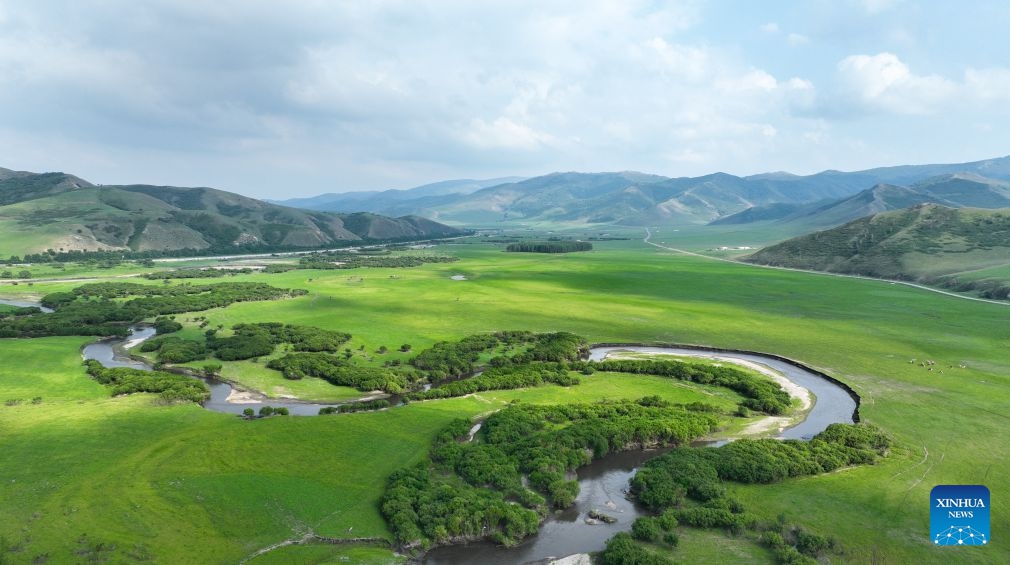
China has become the first country in the world to achieve zero growth in land degradation, with 53 percent of its treatable sandy land effectively restored.
Over the past five years, China has completed 36.6 million hectares of land greening, raising its forest coverage rate to more than 25 percent and contributing about 25 percent of the world's newly added green areas, statistics from the NFGA show.
Moreover, China attaches great importance to international cooperation on desertification control. It has established the China-Mongolia Desertification Prevention and Control Cooperation Center, the China-Arab International Research Center for Drought, Desertification, and Land Degradation, and the China-Central Asia Desertification Prevention and Control Cooperation Center, providing Chinese solutions and expertise to the global fight against desertification, according to China's National Forestry and Grassland Administration.
For example, hundreds of wells drilled by Chinese teams have turned sandy areas into farmland in Egypt, supporting desert reclamation. China has supplied drought-resistant saplings to Mongolia's "Billion Trees" campaign. Africa's own "Great Green Wall" initiative, inspired by China's National Forestry and Grassland Administration, has also gained support from China, Xinhua reported last year.
。 本报讯 《日报》全媒体记者 刘鑫睿报道 青年党员是各级组织的新鲜血液和事业发展的中坚力量。

二 | 为开展好党纪学习教育,督促青年党员守住守牢拒腐防变防线,主动争坐党纪学习教育课堂的“最前排”,龙港区开设“四纪”课堂,引导广大青年党员真正做到学纪、知纪、明纪、守纪。 开展常态化学习,通过理论讲授学习党纪。依托“支部书记讲党课”“三会一课”等党员活动开展支部学习,促进青年党员党内学习制度化、常态化;依托学习强国、“龙港党建”微信公众号等云端平台开展线上学习,转发推送《中国共产党纪律处分条例》系列解读等权威资料;完善党校特色党纪学习教育体系,优化党校课程设置,全周期加强党纪教育进课堂、进教材、进头脑,扣好青年干部廉洁从政“第一粒扣子”。

三 | 讲好情景党课,通过情景互动理解党纪。组织青年干部到机关、乡镇、企业等基层党组织与离退休老党员、机关干部、社区群众面对面开展各具特色的“情景互动”党课,以案说纪说法,展现青年干部的清澈和纯粹。强化警示教育,通过案例教学明晰党纪。梳理近年来青年干部违纪违法情况,学习典型违纪违法案例、观看警示教育片,邀请专家、讲师为青年干部讲授专题廉政教育课,进一步提升纪律规矩意识。 坚持对照查摆,以目标为导向坚守党纪。引导青年党员对照《中国共产党纪律处分条例》逐条检查,紧密联系个人思想实际,查找自身存在的不足和问题,严格执行和维护党的纪律,自觉将纪律要求内化于心、外化于行。

四 |
Current article:http://6oh0c.zhuaicaisaanzhenshunnaiwei.bond/d07/20260826/4201.html
Published on:00:00:00
上一篇:Hamid urges Brunei Sultan to recruit more manpower from Bangladesh
下一篇:集邦咨询:存储器合约价持续飙升,预估2027年占主要CSP资本支出比重将达68%
下一篇:集邦咨询:存储器合约价持续飙升,预估2027年占主要CSP资本支出比重将达68%
我的网站相关内容
 Academics See No Clear Exit for Johnson or Replacement PM
 民宅内查获42处大麻种植点 警方提醒房东:注意检查你的房产
 隆多:看好詹姆斯带76人夺冠 他们阵容配置太豪华
 苹果正式推送iOS16更新:推出重新设计锁定屏幕
 Birthday Special: Movies Starring Dharmendra and Sharmila Tagore Together
 Blast at shipyard in E.China’s Fujian leaves 12 injured; 1 missing firefighter discovered: reports
我的网站最新内容
- ·Chargerlab:AppleAirpower终于来了,供应链已经开始生产了。
- ·官方公告:Redmi Red Rice Note 7将通过系统升级升级到混合3超夜景模式
- ·枣庄:把日子“绣进”城市建设里
- ·上海金属网:锡价小幅上行市况一般
- ·参赛规模创新高!中国新生代骑手突围套马沟,惊艳世界赛场
- ·Akhanda 2 Release Crisis: Balakrishna to Cut Down His Remuneration?
- ·“为福添彩 福利彩票圆梦大学生行动”走进高青,遇见追梦少女
- ·Poll shows US youth favor China engagement, reject restrictive policies; Washington’s China containment narratives lose traction: expert
- ·Must continue to act against terror: India on Pak's removal from FATF grey list
- ·绿茵之外 微光正暖 “顺心顺意 即刻精彩”龙江体彩公益活动圆满收官
- ·亲绿智库民调:卢秀燕满意度破5成优于林佳龙,江启臣当选看好度大幅领先何欣纯
- ·体彩进四平路街道 多部门联动筑牢社区安全防线
- ·杭州“最浪漫公交”迎来七岁生日 明天“七夕”,西湖边浪漫打卡你来吗?
- ·【品种策略】氧化铝:08月26日多家期货公司晨报观点汇总
- ·コーヒーはいつ飲むべき? エネルギー補給にベストなタイミングを栄養士が解説
- ·久久为功,不断巩固拓展学习教育成果
我的网站热点内容
- ·More than 1,600 migrants arrive on Spanish Canary Islands
- ·【60歳代・70歳代】単身世帯の「平均貯蓄額・中央値」はいくら?金融資産保有額別の《世帯割合》を解説!
- ·Grassroots official’s 30-year fight against desertification in North China
- ·Ukraine Crisis Highlights Concerns About Whether OPCW Still Has Any Global Relevance, Observers Say
- ·高燃!177秒看中国的超级装备
- ·美公布多项针对伊朗经济制裁,将针对全球范围内仍与伊朗保持商业往来的实体及国家实施制裁;伊朗议会议长回应:没人相信美国胡言乱语
- ·阿迪达斯,翻身了?
- ·抚顺渼瑞项目力争年底完工
- ·刚刚,奥特曼炮轰达里奥反人类!绝密模型同日曝光
- ·Drunk Man 'Smashed His Way Out of Coffin After Being Buried Alive as Sacrifice to Mother Earth'
- ·三名新加坡男子洗钱被捕
- ·[포토] 이륙하자마자 모두 추락… 한국형 자폭드론 실험 실패
- ·今天的头条新闻、震颤和其他骚乱,腾讯棕榈联盟的社交河湖再次掀起高潮。
- ·民事起诉状(未成年充值刷礼物)
- ·暑期护童心:严禁未成年人购买、兑付彩票
- ·七月起,大模型进入“无限战争”