
功夫足球
Chinese team develops intelligent vision sensor that turns light signals into AI-ready tokens, reducing use of energy_我的网站

一 | 来源:【安徽财经网】安徽财经网讯:11月15日-17日,“驾游安徽 绿色新里程”2024安徽自驾游大会在安庆市岳西县举办。
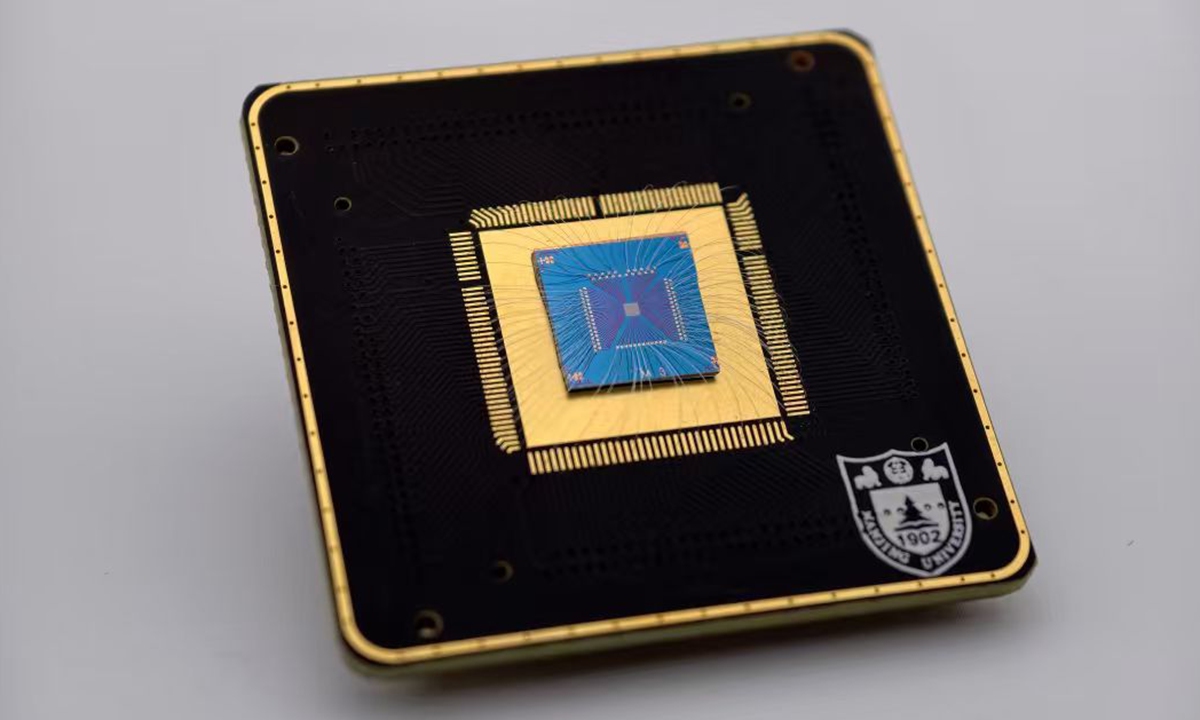
A Chinese research team from Nanjing University has developed a new ultra-low-power intelligent vision sensor chip, dubbed "LightTok," that can convert light signals into tokens within the sensor, significantly reducing the high energy consumption caused by frequent transfers of massive amounts of redundant data, the principal investigator told the Global Times.
According to a release from the Institute of Brain-Inspired Intelligence of Nanjing University, tokens generated by the LightTok chip can be directly fed into a Transformer encoder for image recognition.
"Our design idea was to move token generation onto the sensor itself, allowing the chip to directly produce tokens that AI models can process once light reaches the sensor," Miao Feng, director of the Institute of Brain-Inspired Intelligence at Nanjing University, told the Global Times on Thursday. "These tokens contain complete image information."
Physical AI refers to intelligent systems capable of autonomously perceiving, reasoning, acting and receiving feedback in the real world, representing a key pathway for AI to move from the digital realm into the physical world. Vision-based physical AI systems powered by large AI models need to convert visual information from real-world environments into tokens that can be processed by AI models before feeding these tokens into Transformers for subsequent tasks.
In traditional visual perception pipelines, light signals must go through multiple stages, including image sensing, analog-to-digital conversion, data buffering and transfer, digital image patching and embedding, before being transformed into tokens that AI models can process. The frequent transfer of massive amounts of redundant data has resulted in high energy consumption at the edge, according to a report by Science and Technology Daily.
The LightTok chip directly addresses a key challenge in physical AI hardware: how to efficiently acquire and tokenize visual information from the physical world with low energy consumption, Miao said.
The LightTok chip consists of a photosensitive memory array and peripheral circuits. The team built the array based on single-layer molybdenum disulfide (MoS₂) floating-gate phototransistors, with each pixel capable of sensing light, storing information and performing analog computing. By processing optical information directly within the chip, the device can convert captured visual signals into tokens for AI models, according to the research team.
The current LightTok prototype has a resolution of 32×32 pixels, or 1,024 photosensitive pixels, which is still smaller than that of smartphone cameras and industrial imaging systems. However, Miao said the technology is compatible with CMOS manufacturing processes and can be scaled up. With wafer-level growth of molybdenum disulfide materials, the chip could potentially achieve a scale comparable to existing imaging devices.
Miao said the chip also draws inspiration from the information-processing mechanism of human vision. Similar to how the retina extracts key visual information before transmitting it to the brain, the chip also aims to process visual information at an early stage.
The research was conducted in collaboration with another research team from the National University of Singapore. The findings were published on Wednesday in Nature Sensors, an internationally renowned journal in the field of sensing technology, according to the release.
Potential applications for LightTok include drone systems, autonomous remote sensing and small-scale embodied AI systems, Miao said. In these scenarios, devices need to continuously detect, understand and track targets, generating massive amounts of visual data. By reducing the energy required for visual processing, the technology could extend the operating time of drones, satellites and small robots with limited power supplies, the expert said.
。本次大会由安徽省文化和旅游厅、安徽省汽车办、安庆市人民政府联合主办。2014年起,安徽自驾游大会已成功举办十一届,始终致力于“以营销推广推动产业发展”,坚持赋能重大项目、联动区域发展、助力乡村振兴,“驾游安徽”已成为安徽文旅重要特色品牌,为长三角乃至全国各地自驾游大会活动提供了示范样板。据悉,今年,“驾游安徽”品牌迈入新十年,本次大会立足文旅融合、创新发展,展现“三新”特色:主动抓住新能源汽车首位产业风口,大力推动自驾游风景道沿线持续完善补能网络和基础设施建设,将多彩风景与“绿色里程”完美融合,为“驾游安徽”品牌注入新动能;创新推行“驾游安徽合伙人”计划,与上海铁路局联合推出高铁落地自驾产品;联合省汽车办,邀请省内多家新能源车企,推出汽车文创市集,以展促销;全面梳理省内各市驾游新场景,线上发起榜单评选,请广大车友用“方向盘”投票,以市场逻辑重新定义“驾游安徽”品牌体验。

二 | 大会发布了“驾游安徽 绿色新里程”主题视频、“驾游安徽×新能源”体验场景榜单、大黄山自驾新玩法,为上铁文旅传媒集团、支付宝、捷途汽车、蔚来汽车等13家“驾游安徽合伙人”颁发证书,开展“驾游安徽合伙人”分享、长三角客源互送签约。据了解,“驾游安徽×新能源”体验场景榜单中首批十个较为适合新能源汽车路试的场景分别是:黄山市徽州天路(蜈蚣岭)、黄山市黄山世界遗产风景道(汤口-东黄山段)、宣城市皖南川藏线(桃岭六道弯)、池州市石台天路(七井山段)、安庆市天妙公路、合肥市庐南川藏线(双顶山)、芜湖市红杨山汽车体育公园、六安市中国红岭公路(马丁公路)、淮北市龙脊天路、马鞍山市六衖石头部落(草原天路段)。

三 | 十个个特别“出片”的新能源汽车宣传片拍摄场地分别是:黄山市太平湖、宣城市储家滩、池州市平天湖、安庆市牛草山、滁州市黄寨草场、合肥市红石咀公园、蚌埠市龙子湖风景区(湖上升明月)、淮南市寿州古城(宾阳门)、阜阳市颍州西湖、宿州市砀山梨园。

四 | 适合车企组织自驾车友体验活动的场地榜单则包括:黄山市西溪南、黄山市漫溪里生态旅游度假区、宣城市桃花潭旅游度假区、池州市东九华旅游度假区、安庆市天悦湾旅游度假区、芜湖市途居马仁山露营地、铜陵市永泉小镇、滁州市静港营地、六安市陡沙河温泉旅游度假区亳州市亳州望月潭营地。大会创新举办潮玩市集,露营风新能源车展、原创村咖、文创精品、3C产品、趣味游戏、汉服游园,让人目不暇接、流连忘返。

五 | 15日下午,举办“驾游安徽”产业赋能对接会。来自上海、江苏、浙江、北京等16个省市的自驾游协会、俱乐部、周边企业和车企代表,与安徽省内各市文旅企业代表参会,台上抢麦推介,台下洽谈交流,全方位助力安徽自驾游产业发展。会后还组织了踩线活动,邀请重点客源城市自驾游渠道商、媒体达人代表,实地探访“岳西云路”风景道,进一步助推“引客入皖”。

六 | (记者 祝亮 李小凡/文图)本文来自【安徽财经网】,仅代表作者观点。全国党媒信息公共平台提供信息发布传播服务。

七 |
Current article:http://6oh0c.zhuaicaisaanzhenshunnaiwei.bond/n04/20260826/7676821.html
Published on:00:00:00
我的网站最近更新
- Xbox Series S|X获十月更新:主屏幕新增搜索栏 主机可更改电视音量
- 三明“福彩+慈善”首家驿站正式启用
- 漳州水产种业再添优质新种
- 新疆众和成立新矿业公司注册资本1亿
- 17 dead after Bangladesh train crash that may have been due to disregarded red light
- 天文学家确认已知最大星系边界 宽度相当于十七个银河系并排排列
- 气膜“罩”住尘与噪 施工无惧风和雨
- 不加入美对伊朗“经济战”就将被制裁?外交部回应
- 奥克兰市区旅馆大火:有人在楼外斗殴,三人拔刀相向
- जर्जर घोषित भवन में चल रहा रेवाड़ी बस स्टैंड, भरभराकर गिर रहा प्लास्टर, खतरे के साये में रोडवेज कर्मी
- 马斯克警告做空机构“存活率极低”,SpaceX股价终结七连跌
- 广州首次出台农田基础设施管护规范性文件,11月1日起实施_包括_办法
- 《传奇之梦》复古合击8月24日删档首测,搜打撤玩法重磅首推!
- Major water main break impacts thousands in a New York county
- 外媒:澳大利亚一博物馆大量中国文物遭破坏,嫌疑人逃了!
- 中东冲突推高能源价格 英国10月家庭能源成本将上涨
- 国庆庆典现场突降大雨 观众:热情不减
- 联想Z5 Pro GT 855版北京东延:1月29日正式开业
- 诺禾致源:上半年净利润6312.26万元 同比下降19.82%
- 2026年短途出行 哪些优质山水景区更适配全龄出游
- “中国脆李之乡”释产业红利 变“单打冠军”为“团体冠军”,“中国脆李之乡”释产业红利 变“单打冠军”为“团体冠军”
- 上海再出楼市新政!公积金、信贷、补贴等多箭齐发
- 克莱签约热火更多内幕:买断放弃980万薪水 两年前因浓眉拒绝湖人
- IO Interactive 庆祝《007 First Light》上市三个月销量突破 400 万份
我的网站热门资讯
- 邢志杰:体系化构建韧性DNS,筑牢数智网络根基
- 补齐自动驾驶法律空白!道路交通安全法修订草案提请审议 明确车企权责边界
- 怀旧经典,新游扎堆!暑期武侠MMO大乱斗!十一年老服焕新
- Secret Service Agents Might Refute Under Oath Ex-Meadows Aide's Account of January 6 Events
- Chandra Grahan 2025: सात सितंबर को लगने जा रहा पूर्ण चंद्रग्रहण, इस बार होगा ब्लड मून
- 大众和福特下周将宣布更深入的联盟:削减开发成本
- Vande Bharat train from Mysore
- Envision, DeepSeek’s Ulanqab pivot taps China’s energy strengths, natl plan; ‘Clusters of AI computing hubs show institutional strengths’
- 陕港人才交流推介会在港举行
- XBOX One Insider会员新功能:主页改进、本地存档管理及个人资料徽章
- 【观点】光大期货:纯碱基本面宽松不改,期价底部震荡
- 围甲联赛:成都落败仍领跑 李维清主将六连胜
- 石家庄鲸曼商贸有限公司
- 김천시, 공무원들이 뽑은 ‘생활밀착형 시책’ 7건
- Reuters videographer killed in southern Lebanon by Israeli shelling laid to rest
- 雷军:小米成立之前,他是华为的忠实粉丝。
- 国防动员法修订草案二审 拟发展新兴领域国防动员力量
- AI智能体能自主生成并运行量子计算代码
- 制动控制模块软件存在偏差/共计2辆 极星Polestar 2开启召回
- 还能65岁退休吗?以后领新西兰退休金要先收入测试?
- SL seeks ILO help for digital database
- 韩国存储巨头选用芯动LPDDR6/5X尖端IP,卓越PPA实力获国际客户认可
- 层林尽染 五彩斑斓
- Bolivia reports second monkeypox death